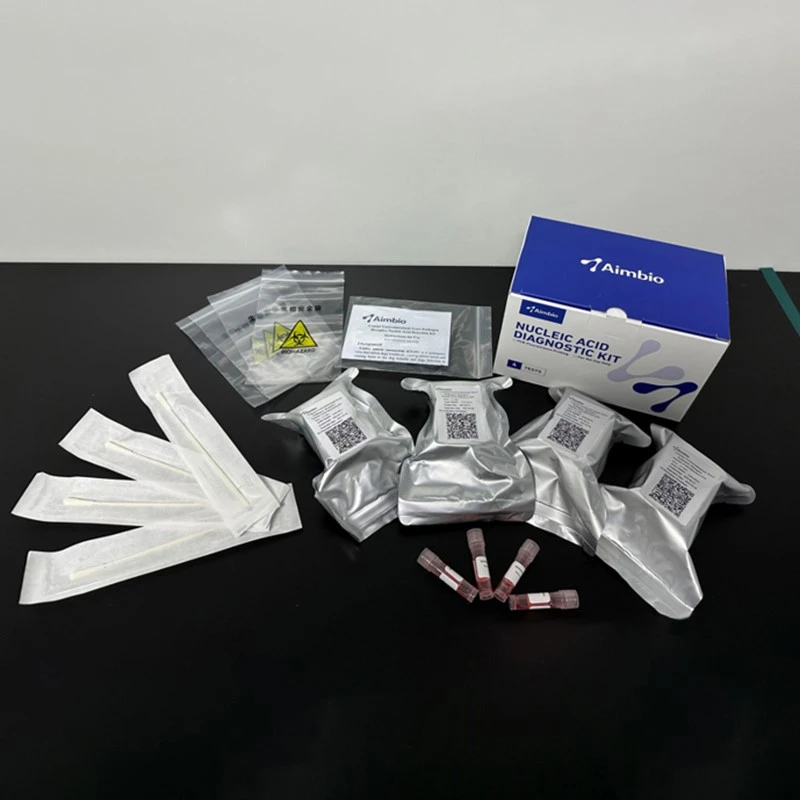
Each test run must include both negative and positive controls. The negative control is used to monitor for contamination; the appearance of an amplification curve in any channel indicates contamination, requiring an investigation before the results for the entire batch can be processed. The positive control is used to verify that the reaction system is functioning correctly; a typical amplification curve should appear in the corresponding channel(s). If the internal control for a specimen fails, the absence of a signal for the target(s) cannot be interpreted as a negative result; in such cases, the specimen must be re-extracted or re-collected.
Laboratories must establish an internal quality control (IQC) system, maintain quality control charts, and define "out-of-control" criteria; test data from any batch that falls outside these control limits must not be released. Participation in external quality assessment (EQA) programs-organized at the provincial level or higher-allows for the evaluation of the external consistency of the laboratory's test results. For guidance on testing indications and the interpretation of results, laboratories should refer to relevant expert consensus statements and industry technical documents concerning nucleic acid testing for respiratory pathogens.