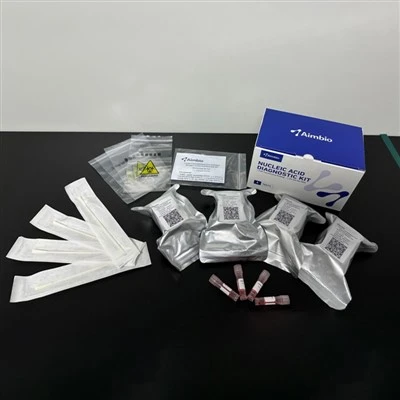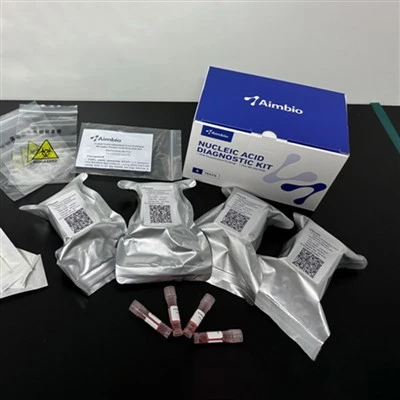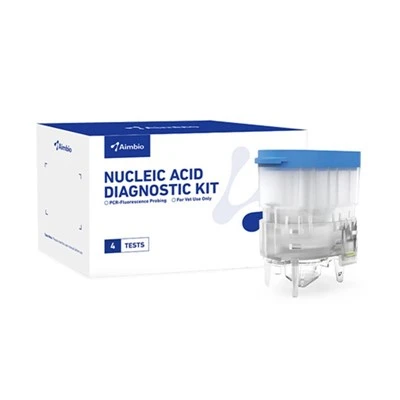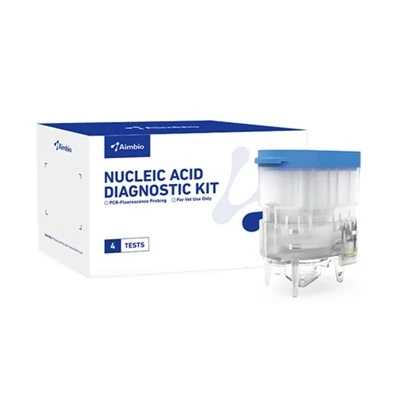
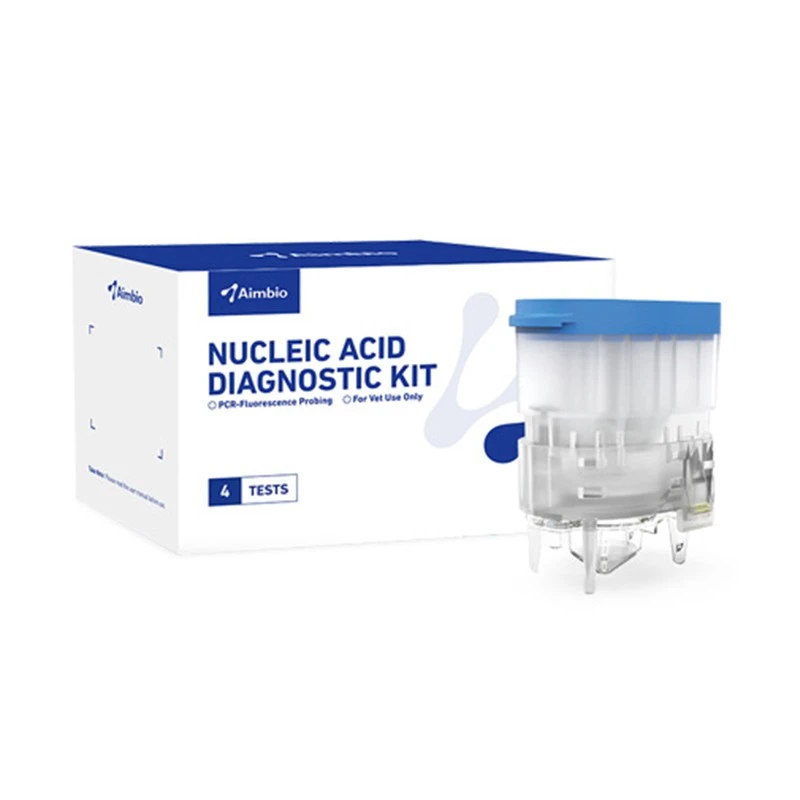

Hangzhou Aimbio Technology Co., Ltd. is one of the leading manufacturers and suppliers of vector-borne pathogen tetraplex nucleic acid detection kit in China. We are committed to providing high quality customized products with competitive price. If you're going to buy bulk advanced test kits made in China, welcome to get quotation from our factory.
Product Details
| Item | Description |
| Product name | Vector-borne Pathogen Tetraplex Nucleic Acid Detection Kit |
| Reference code | CF-045 |
| Specimen | Anticoagulated whole blood |
| Storage | Shipped at ambient temperature and stored at 2-8°C (36-46°F) for up to 12 months. |
| Use restriction | For veterinary use only, not for IVD. |
| Applicable instrument | Nucleic Acid Amplification Analyzer AIMDX1800 |
Arthropod-transmitted infections
Vector-borne diseases (VBDs) are caused by a wide range of infectious agents including viruses, bacteria and parasites, and transmitted by arthropod vectors such as ticks, fleas and mosquito. VBDs can affect both dogs and cats. The tetraplex covers bacterial and protozoal organisms within this wider disease category.
Anaplasma organisms and clinical signs
Anaplasmosis is caused by Anaplasma spp. which are vector-transmitted obligate intracellular bacteria. Anaplasma phagocytophilum and Anaplasma platys (formerly known as Ehrlichia platys) are the main causative agents. Anaplasmosis is a tick-borne disease caused by the infectious bacterial organism Anaplasma phagocytophilum, which has a worldwide distribution and endemic areas. The most frequently observed clinical signs include fever, lethargy, inappetence or anorexia, weight loss and musculoskeletal pain or discomfort.
Ehrlichia within the panel
Vector-borne Pathogen Tetraplex Nucleic Acid Detection Kit also includes Ehrlichia spp. Ehrlichiosis in dogs is an emerging vector borne rickettsial zoonotic disease of worldwide distribution. In general, three Ehrlichial species (Ehrlichia canis, E. ewingii, and E. chaffeensis) are involved in infecting dogs. Among them, E. canis is the well-known etiological pathogen affecting platelets, monocytes, and granulocytes.
FAQ
Q: How should molecular findings be assessed?
A: Detection result can be combined with clinical and epidemiological risk factors to assist in the diagnosis of the causative pathogens. Babesiosis is caused by haemoprotozoa of the genus Babesia which infect erythrocytes.
Q: Which blood specimen is specified?
A: Anticoagulated whole blood. For veterinary use only, not for IVD. Read this instruction carefully before starting the test.
Q: Which instrument analyzes the tetraplex?
A: Nucleic Acid Amplification Analyzer AIMDX1800. Multiplex real-time quantitative PCR proceeds in the cartridge; the detection result is analyzed by the AIMDX1800 analyzer.
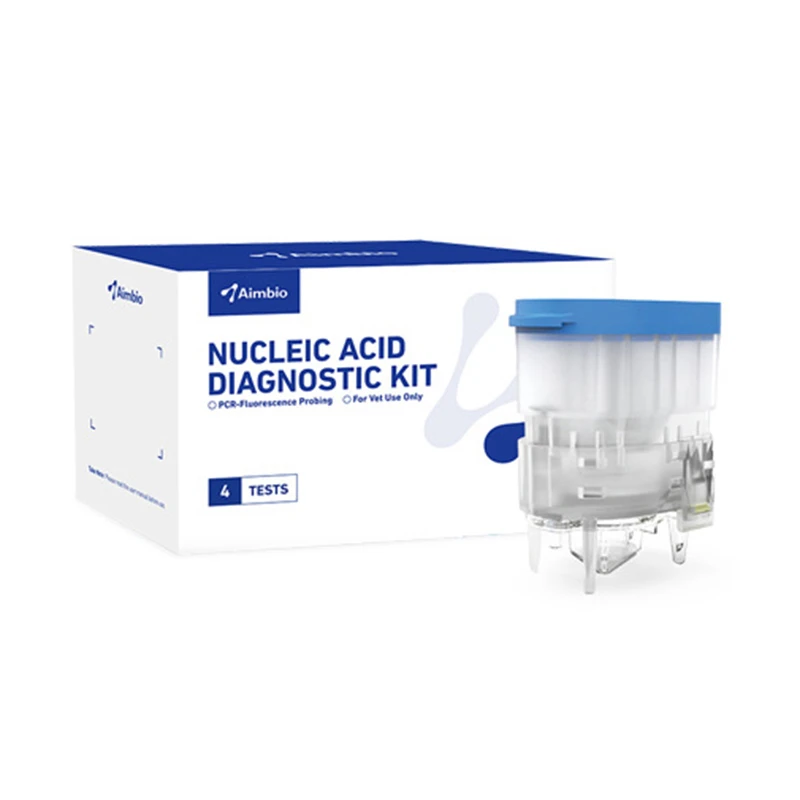
Hot Tags: vector-borne pathogen tetraplex nucleic acid detection kit, China vector-borne pathogen tetraplex nucleic acid detection kit manufacturers, suppliers, factory