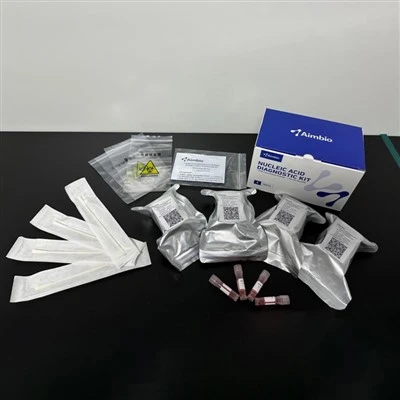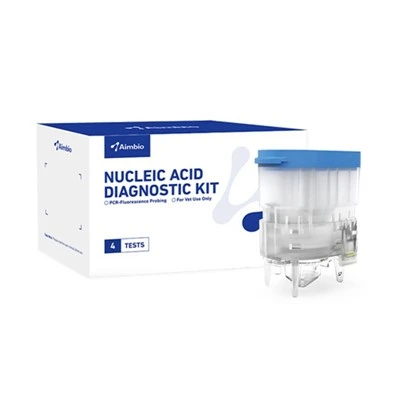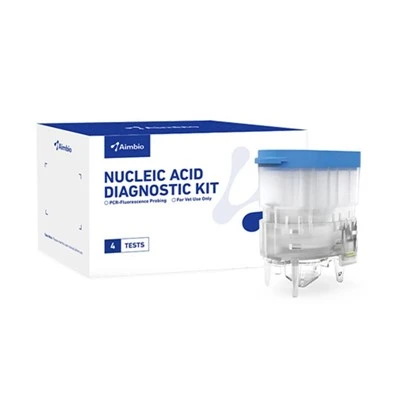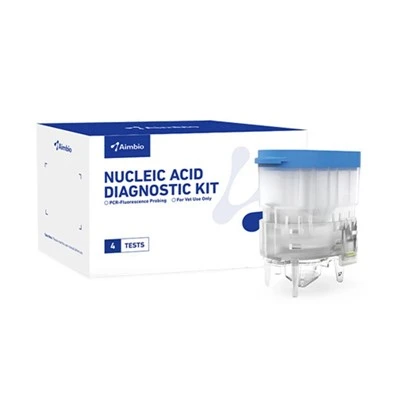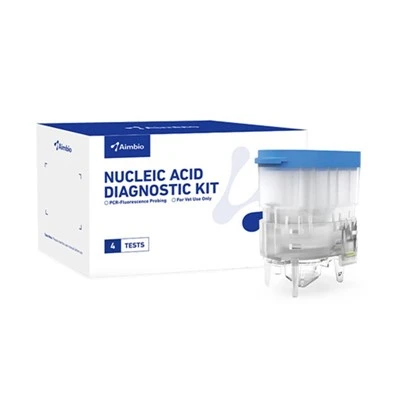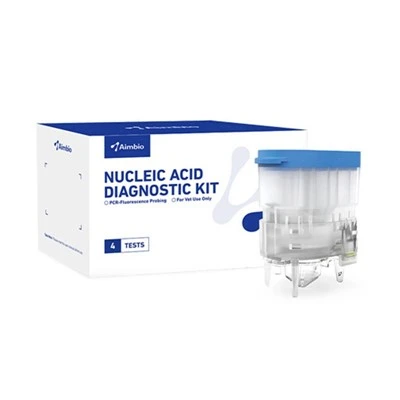
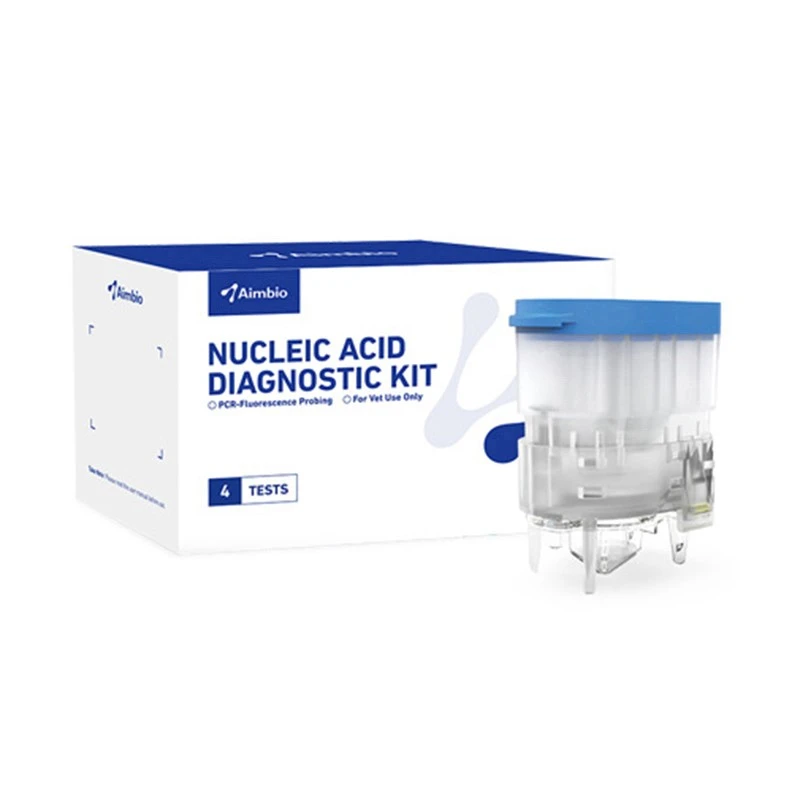

Hangzhou Aimbio Technology Co., Ltd. is one of the leading manufacturers and suppliers of anaplasma babesia and ehrlichia quadruplex nucleic acid detection kit in China. We are committed to providing high quality customized products with competitive price. If you're going to buy bulk advanced test kits made in China, welcome to get quotation from our factory.
Product Details
| Item | Description |
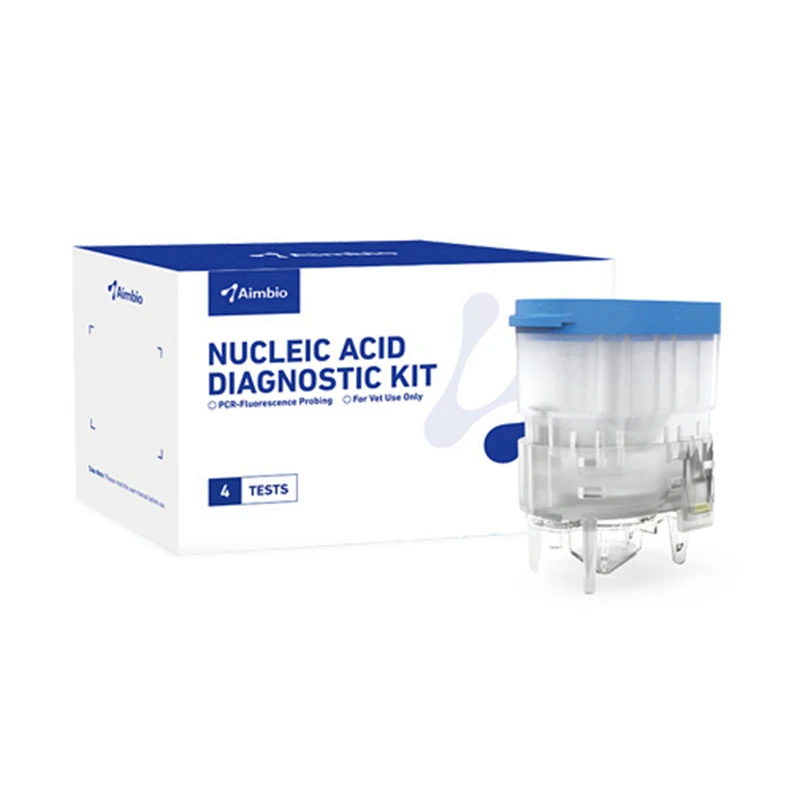
| Product name | Anaplasma Babesia and Ehrlichia Quadruplex Nucleic Acid Detection Kit |
| Reference code | CF-015-2 |
| Specimen | Anticoagulated whole blood |
| Applicable instrument | Nucleic Acid Amplification Analyzer AIMDX1800 |
| Use restriction | For veterinary use only, not for IVD. |
| Storage | Shipped at ambient temperature and stored at 2-8°C (36-46°F) for up to 12 months. |
Anaplasma Platys Infection
Anaplasma platys (formerly known as Ehrlichia platys) is a platelet-specific microorganism which can cause canine infectious cyclic thrombocytopenia. The pathogen is found in dogs with mild and severe thrombocytopenia, but also in asymptomatic ones. Co-infection with other vector-borne pathogens influences the severity of A. platys infection.
Ehrlichiosis In Dogs
Ehrlichiosis in dogs is an emerging vector borne rickettsial zoonotic disease of worldwide distribution. In general, three Ehrlichial species (Ehrlichia canis, E. ewingii, and E. chaffeensis) are involved in infecting dogs. Among them, E. canis is the well-known etiological pathogen affecting platelets, monocytes, and granulocytes.
Quadruplex Blood Testing
Anaplasma Babesia and Ehrlichia Quadruplex Nucleic Acid Detection Kit uses anticoagulated whole blood. Gene from the host cell DNA is used as an internal control (IC). Detection result can be combined with clinical and epidemiological risk factors to assist in the diagnosis of causative pathogens. The development process of the disease, sample quality, kit detection limit, pathogen variation and other factors may affect the detection results. Canine babesiosis is a significant tick-borne, protozoal, hemoparasitic disease caused by infection by parasites of the genus Babesia. These protozoa are classified as either large forms (e.g., Babesia canis) or small forms (e.g., Babesia gibsoni).
FAQ
Q: What clinical signs can accompany babesiosis?
A: All Babesia species can cause fever, enlarged lymph nodes and spleen, anaemia, thrombocytopenia, jaundice and pigmenturia. Frequent clinical signs associated with canine babesiosis are apathy, weakness, anorexia, pale mucous membranes and a poor general condition.
Q: How should cartridges be kept before testing?
A: Shipped at ambient temperature and stored at 2-8°C (36-46°F) for up to 12 months. Do not unpack foil pouches until you are ready to perform testing.
Hot Tags: anaplasma babesia and ehrlichia quadruplex nucleic acid detection kit, China anaplasma babesia and ehrlichia quadruplex nucleic acid detection kit manufacturers, suppliers, factory